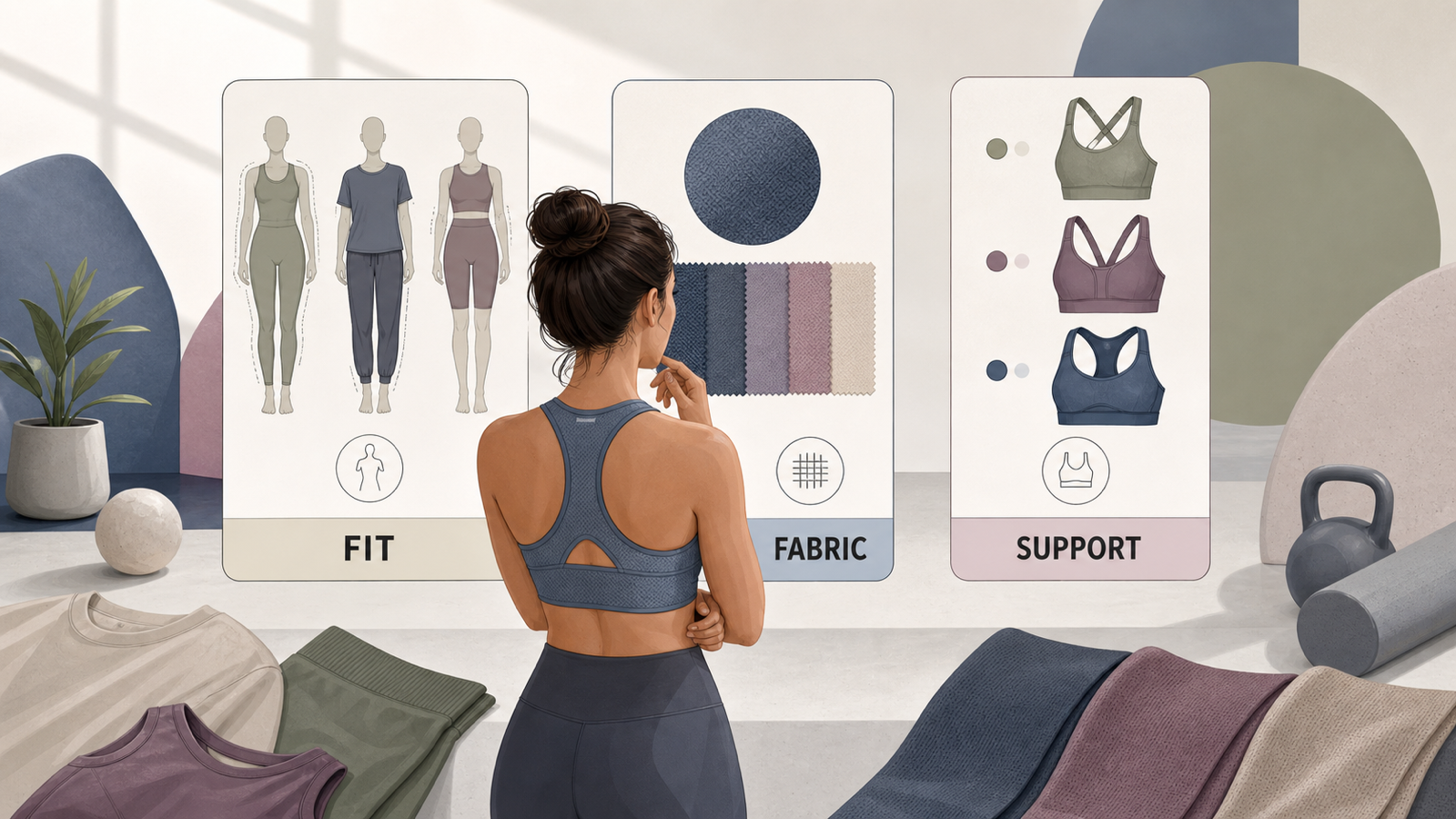
Performance athleisure works best when it starts with your real routine, rather than a search for one “best” outfit. For UK shoppers, the useful comparison is between running, gym training, yoga and everyday movement: each asks for a different balance of fabric, fit, coverage and versatility.
How to Choose Performance Athleisure for Your Needs
AI-generated illustration — not a retailer product photo.
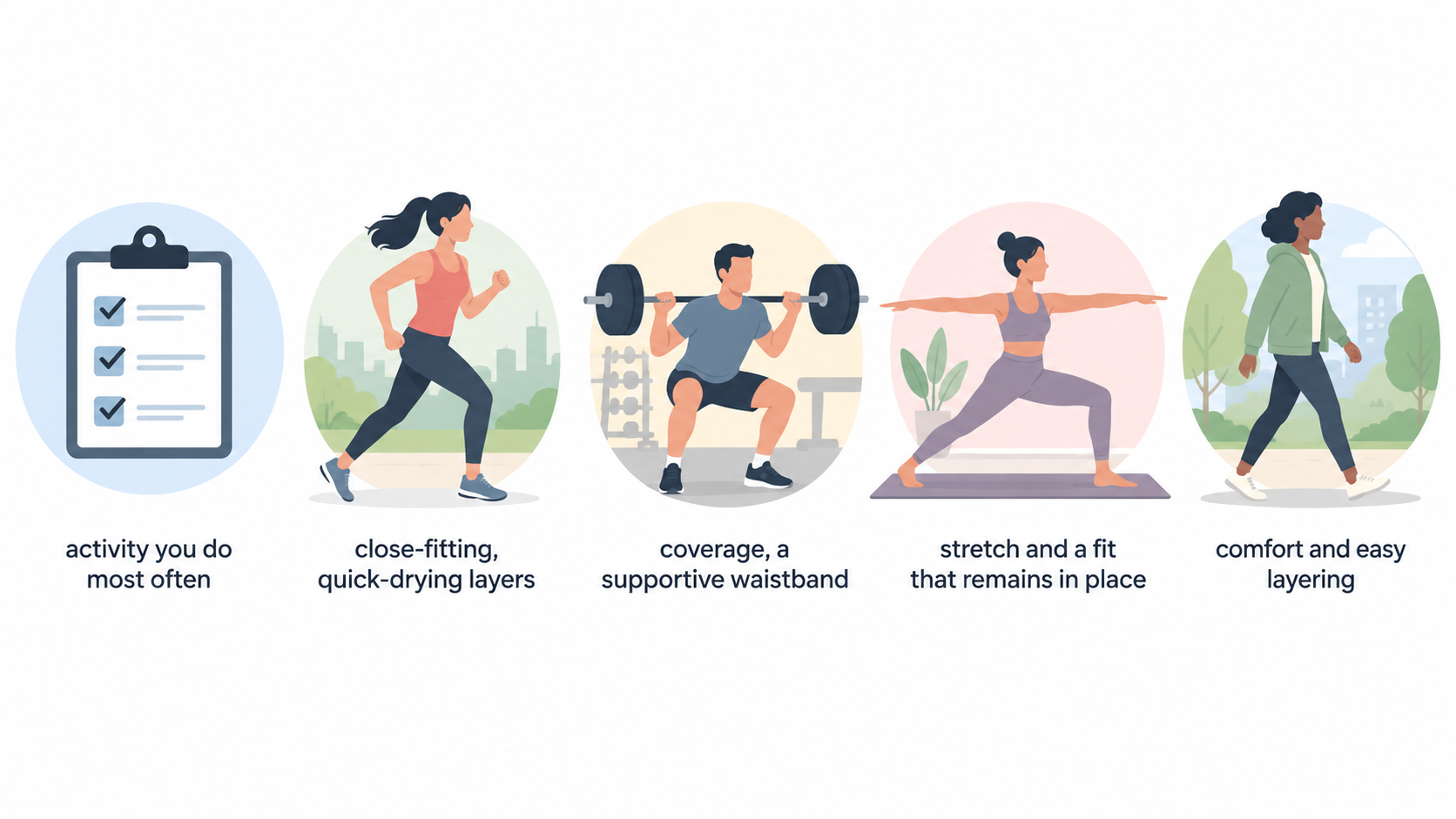
Start by listing the activity you do most often, where you do it and what tends to distract you during a session. A runner may value close-fitting, quick-drying layers that do not rub or move around. Someone lifting weights may prioritise coverage, a supportive waistband and fabric that stays comfortable through repeated bending and squatting. Yoga and Pilates often call for stretch and a fit that remains in place through changing positions. For walking, errands and low-intensity movement, comfort and easy layering can matter more than workout-specific construction.
This approach also keeps expectations realistic. A soft, versatile set may be a good everyday option, while a separate garment can make more sense for a sweat-heavy run or a focused strength session. The right choice is the one that supports the movement, conditions and amount of wear you actually expect from it.
Start With Your Main Activity
AI-generated illustration — not a retailer product photo.
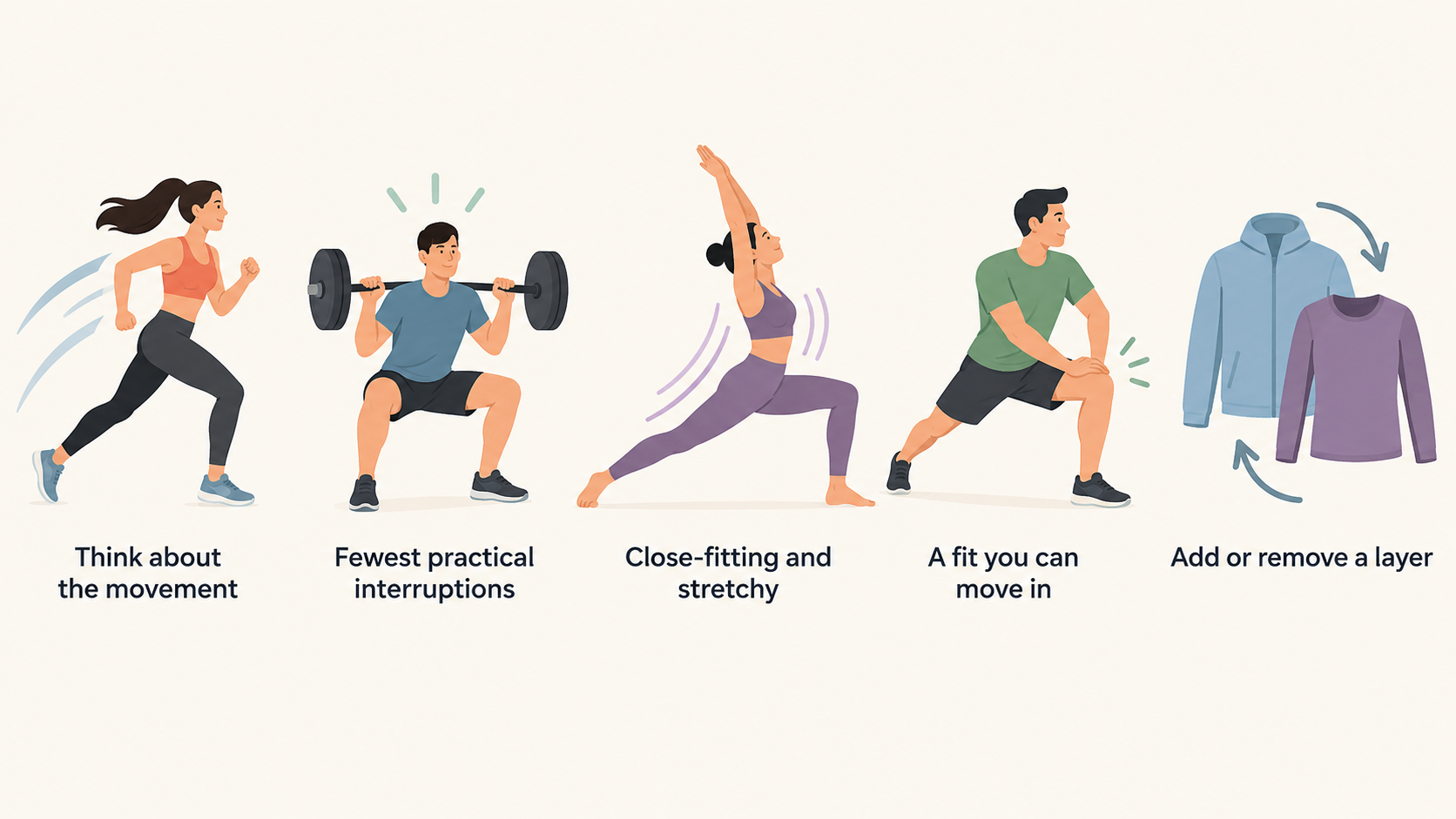
Think about the movement before comparing colours, collections or styling details. The most useful garment is usually the one that creates the fewest practical interruptions during the activity you repeat.
For running, cycling, swimming and more advanced yoga or Pilates, close-fitting and stretchy clothing can help minimise loose material and allow movement. Look for a fit you can move in without repeatedly pulling at hems, waistbands or straps. In cooler conditions, consider whether you can add or remove a layer without becoming weighed down by damp fabric.
For strength training, test the positions you will actually use. Bottoms should give you the coverage and support you want for squats and hinge movements, while the fabric and cut should not feel restrictive around the joints. A fitted top can also reduce the distraction of loose fabric around equipment. That does not mean every item must be tight: the aim is controlled, comfortable movement.
Gentle yoga, walking and everyday use can suit looser pieces or a mix of relaxed and fitted layers. The key distinction is whether loose fabric remains comfortable and out of the way. If a garment works well for an easy walk but bunches, shifts or catches during training, treat it as an everyday layer rather than an all-workout solution.
Choose Fabrics for Sweat, Temperature and Comfort
Read the fabric composition and care label as practical information, not as a promise of a particular performance outcome. For sessions where you expect to sweat, quick-drying fabrics that move moisture away from the skin can help you stay more comfortable. Polyester or polypropylene are commonly used in quick-drying workout clothing; labels may use terms such as moisture-wicking or quick-drying. Wool can also be an option when you want a layer that helps manage comfort across changing temperatures.
Cotton is not automatically unsuitable, especially for light everyday wear, but it absorbs sweat and dries more slowly. That can leave it feeling wet during a hard session, make it less comfortable in warm weather and make you feel cold once conditions cool. If you regularly finish training sweaty, compare cotton with a quicker-drying alternative before making it your main workout layer.
Temperature and setting matter too. A breathable single layer may suit an indoor gym, while outdoor exercise may call for layers you can adjust. Do not rely on a fabric name alone. Consider the garment’s thickness, how it feels against your skin, whether it dries at a pace that suits your routine, and the washing instructions you are prepared to follow.
Prioritise Fit, Coverage and Freedom of Movement
Fit is a functional check, not just a size-label decision. You should be able to move easily, and clothing should not catch on equipment, slow you down or become a repeated distraction. Before keeping a piece for training, try movements that resemble your routine: reach overhead, bend, squat, lunge, twist and, where relevant, jog in place.
For strength work, consider whether the waistband feels supportive and stays where you need it during squat and hinge movements. Check coverage under normal lighting and through the range of motion you expect to use. A thicker or darker bottom may be a preference for anyone concerned about sheerness, but the most reliable check is still movement in the actual garment.
For running, biking, swimming and advanced yoga or Pilates, a form-fitting, stretchy option may reduce excess fabric and help the garment stay in place. For gentle yoga, walking and everyday use, a looser top or outer layer can be comfortable when it does not interfere with your movement. In either case, avoid treating a restrictive fit as proof of support: you should be able to breathe, bend and move naturally.
Coverage is personal, but it should be decided before the first session rather than discovered halfway through it. If you plan to train in a shared gym, outdoors or around equipment, choose a cut that lets you concentrate on the activity instead of adjusting clothing.
Balance Versatility Against Workout-Specific Needs
Versatile athleisure can simplify a wardrobe, but it has limits. A pair of leggings or a lightweight top may work across errands, walking and occasional gym sessions. That is useful when your activity is low intensity or when you value easy layering and casual styling. It does not guarantee the same item will be your preferred choice for frequent running, heavy lifting or a very sweaty workout.
The trade-off is straightforward. A broadly useful item can reduce the number of pieces you own, while a workout-specific piece can better match a repeated movement pattern, expected sweat level or coverage need. For example, someone whose main training is strength work may choose bottoms that feel reliable through squats; someone who mainly runs may prefer a closer-fitting, quick-drying layer. Neither category is automatically superior.
Build from your most common use case first. Then add versatile layers where they genuinely earn their place: a comfortable outer layer for travel to the gym, an everyday top for walking, or a second option for lighter sessions. This makes it easier to avoid buying a fashionable item that is pleasant for casual wear but rarely reaches your training rotation.
Use a Practical Pre-Purchase Checklist
AI-generated generic editorial illustration — not a retailer product photo and does not depict the reviewed product or service. Make the final pre-purchase checklist scannable and actionable.
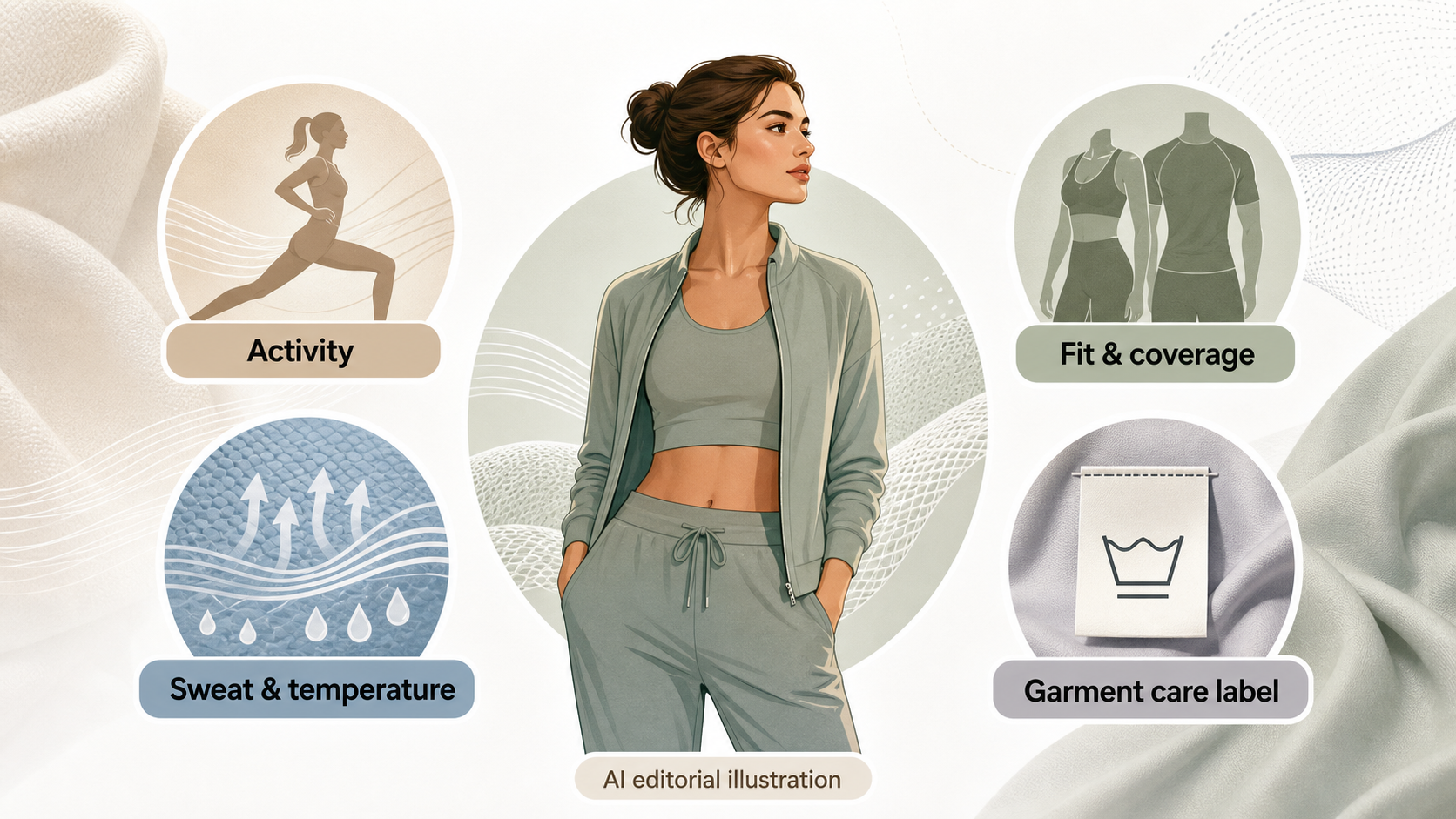 Use this short check before buying a performance-athleisure item:
- Activity: What will I use it for most—running, lifting, yoga, walking or everyday wear? Choose around the movement you actually repeat.
- Sweat and temperature: Will I train hard, exercise outdoors or need removable layers? Check whether the fabric is likely to feel comfortable when damp and whether it fits the conditions you expect.
- Fit and coverage: Can I squat, reach, bend and move without tugging at it? Does the fit stay comfortable and out of the way around equipment or changing positions?
- Care: Have I read the composition and washing instructions? A garment only remains useful if its care routine works with your habits.
For a UK shopper, this is often more valuable than assuming a label, trend or brand name will answer every question. Compare the garment to your own routine, not to an imagined all-purpose workout. If you are between two options, choose the one that solves the most important practical issue for your main activity—such as drying speed for a sweaty session, stable coverage for lifting, or unrestricted movement for yoga.
Frequently Asked Questions
What should I wear to the gym for strength training?
Choose clothing that lets you move comfortably and does not distract you during resistance exercises. For bottoms, consider coverage and a waistband that feels supportive during squats and hinge movements. A closer-fitting top may help keep loose fabric out of the way around equipment, while the overall fit should still allow full movement around the joints. Test the outfit with a few training-like movements before relying on it for a session.
Is cotton suitable for workout clothes?
Cotton can be comfortable for light activity or everyday wear, but it absorbs sweat and does not dry quickly. For sweat-heavy sessions, a quicker-drying fabric may feel more comfortable and help you avoid remaining in damp clothing. Decide based on your training intensity, temperature and how much you sweat rather than treating cotton as universally good or bad.
Should running clothes fit differently from yoga clothes?
They can. Form-fitting, stretchy clothing may be useful for running and can also suit advanced yoga or Pilates because it reduces loose fabric and supports unrestricted movement. Gentle yoga may be comfortable in looser clothing, provided it does not get in the way. In both cases, the practical test is whether you can move freely without the garment shifting, catching or becoming distracting.
Sources
Related reading
- Best performance athleisure: evidence-led top choices
- lululemon vs Gymshark: which is the better fit
- How performance athleisure should fit, feel, and perform
- When to buy performance athleisure for better value
Editorial information: About our editorial team · Read our editorial policy · Read our affiliate disclosure.