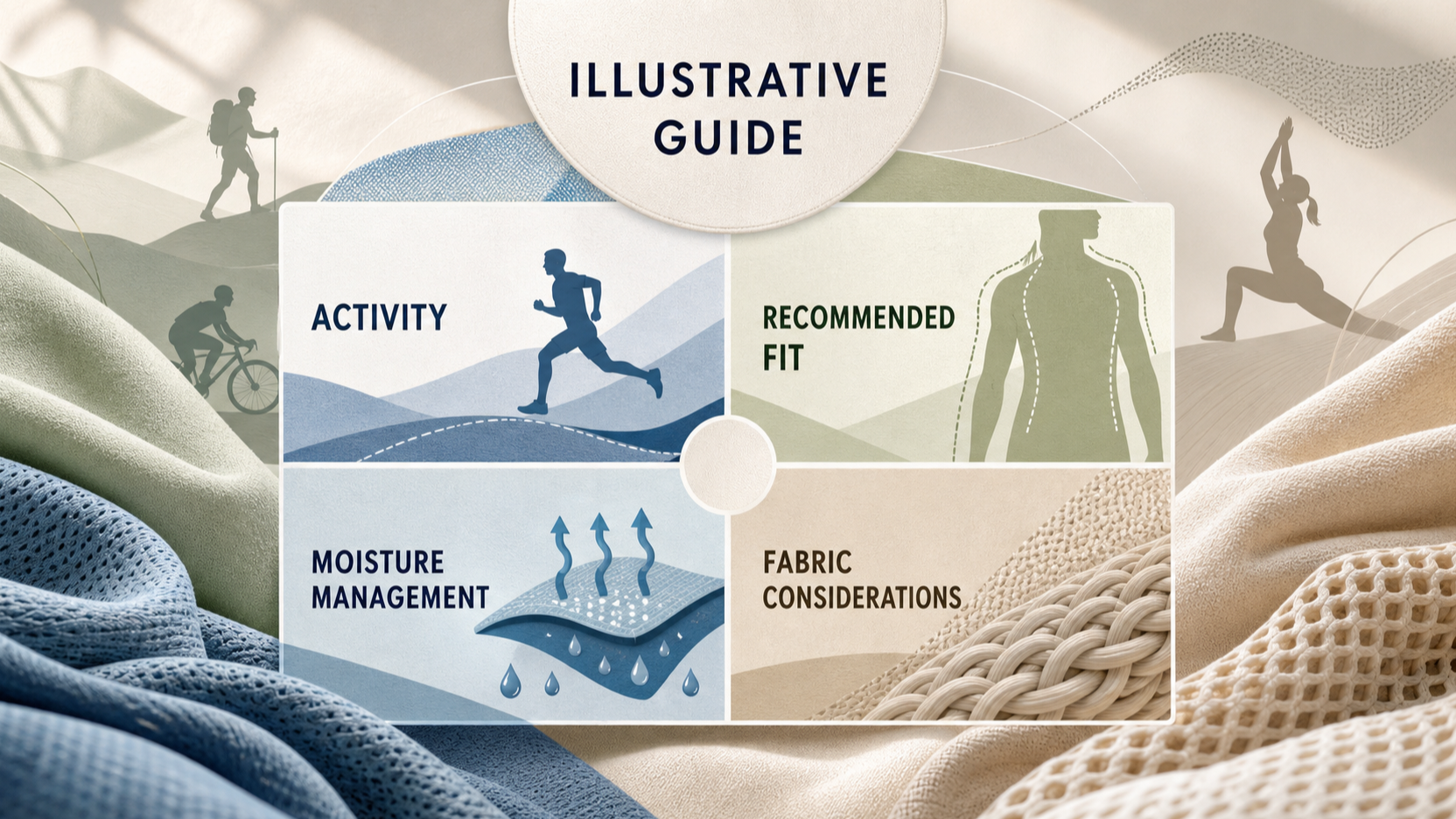
Performance athleisure is easiest to choose when you treat it as movement clothing first and casual clothing second. The useful questions are practical: can you move freely, does the fabric manage sweat in the conditions you expect, and will the garment remain comfortable through the activity rather than only in the changing room? The right answer may differ between a run, a weights session, yoga and a day of errands.
What performance athleisure needs to do
AI-generated illustration — not a retailer product photo.
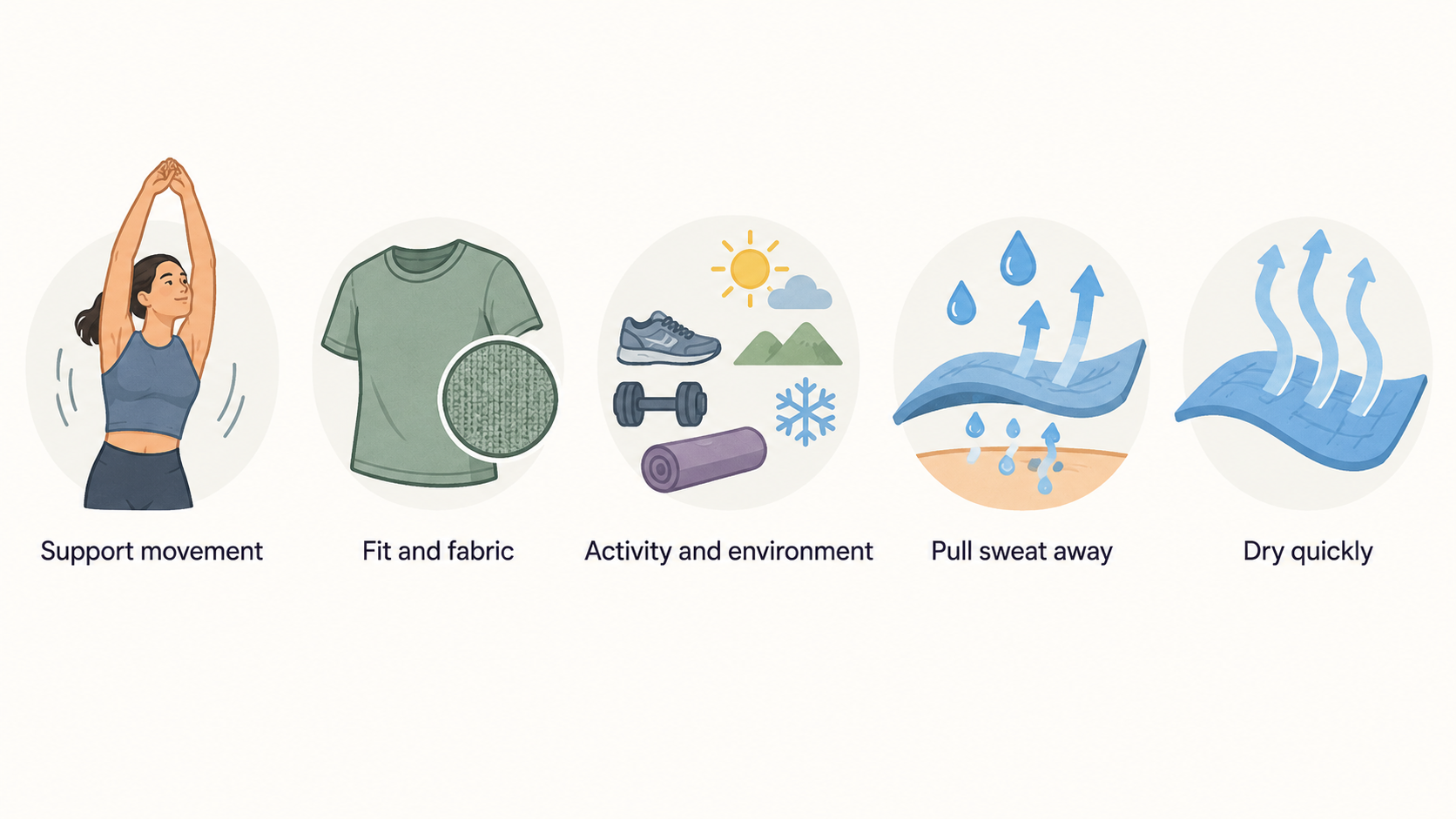
Performance athleisure should support the movement you plan to make without becoming a distraction. That means considering fit and fabric together: a shirt that feels soft while standing still may be less useful if it rides up during overhead work, and a fabric label alone cannot tell you whether a garment will suit your pace, weather or layering needs.
For exercise, MedlinePlus advises choosing clothing with both the activity and the environment in mind. It highlights fabrics that pull sweat away from the skin and dry quickly to help the wearer stay comfortable and dry, while also stressing that clothing should not obstruct movement, catch on equipment or slow you down. (source)
Style still matters for everyday wear, but it is a secondary filter when performance is the goal. Start with the demands of the activity—range of motion, sweat level, contact with equipment and temperature—then choose the cut, coverage and fabric behaviour that meet them. This approach also makes it easier to compare garments with similar marketing language but different constructions and fits.
Choose fit for freedom of movement
AI-generated illustration — not a retailer product photo.
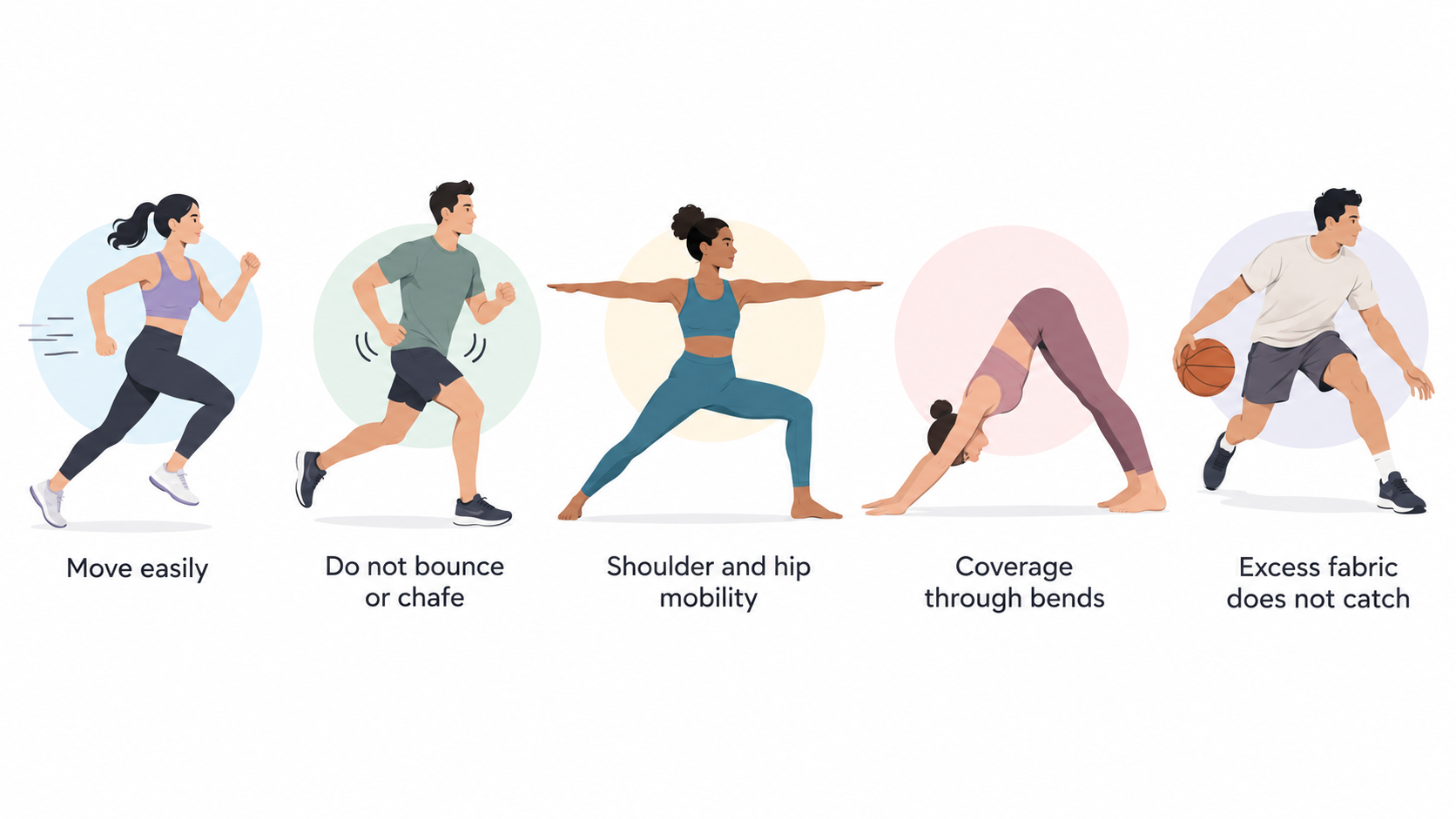
A useful fit is not automatically tight or loose. It is the fit that lets you move easily, stays where you need it and does not interfere with the activity. Before buying, think about the movements you repeat: a runner needs a top and waistband that do not bounce or chafe; a lifter may need shoulder and hip mobility; a yoga practitioner may value coverage through bends and inversions.
Relaxed pieces can work well for walking, gentle yoga, strength training and basketball, provided excess fabric does not catch on equipment or obscure your movement. A looser tee can be comfortable for a low-sweat session, while joggers may suit a warm-up or commute. The key is to check that sleeves, hems, pockets and drawstrings do not become a nuisance when you raise your arms, squat or use machines. (source)
Closer-fitting stretch garments are often more practical for running, cycling, advanced yoga or Pilates, swimming and similar activities where loose fabric can shift, drag or get in the way. Form-fitting does not mean restrictive: seams should sit comfortably, the fabric should allow the required range of motion, and the garment should not pinch when you breathe deeply or bend. MedlinePlus specifically notes that a combination can work too—for example, a moisture-wicking loose outer top over a more fitted base layer. (source)
Coverage and stability are personal checks, not universal rules. Try the movements that matter to you. If a waistband rolls, a neckline gaps, shorts ride up or fabric pulls sharply across the shoulders, consider a different size, rise, length or cut. A garment that needs frequent adjustment is unlikely to feel more useful once you are warm and moving.
Prioritise moisture management and drying
During a sweaty session, fabric performance can affect how comfortable clothing feels. MedlinePlus recommends fabrics that move sweat away from the skin and dry quickly, noting that many quick-drying options are synthetic and made with polyester or polypropylene. Labels may use terms such as moisture-wicking, Dri-fit, Coolmax or Supplex. (source)
Treat those terms as a starting point rather than a guarantee. Look at the fibre content, the weight and feel of the fabric, the garment’s cut and the activity you will use it for. A close-fitting base layer may keep fabric nearer the skin for a run, whereas a roomier outer layer may be more comfortable for a lower-intensity workout. In cool conditions, a damp layer can leave you feeling cold; in warm conditions, a fabric that remains wet may feel less comfortable when you sweat heavily. (source)
Wool is another material MedlinePlus identifies as a good option for staying cool, dry and naturally odour-free. Quick-drying socks, including polyester blends and other specialist fabrics, may also help keep feet cool and dry and reduce the chance of blisters. (source) These are useful characteristics to compare, but they do not eliminate the need to consider fit, weather, washing needs and your own comfort.
For everyday athleisure, you may not need the lightest or most technical fabric. If the garment will be worn for a short walk, commuting or errands, comfort and layering may outweigh rapid drying. For a high-sweat class or an outdoor run, moisture management is more likely to deserve priority.
Account for fabric and skin trade-offs
AI-generated generic editorial illustration — not a retailer product photo and does not depict the reviewed product or service. Make the practical trade-off between sweat management, drying, comfort, and skin considerations easier to understand.
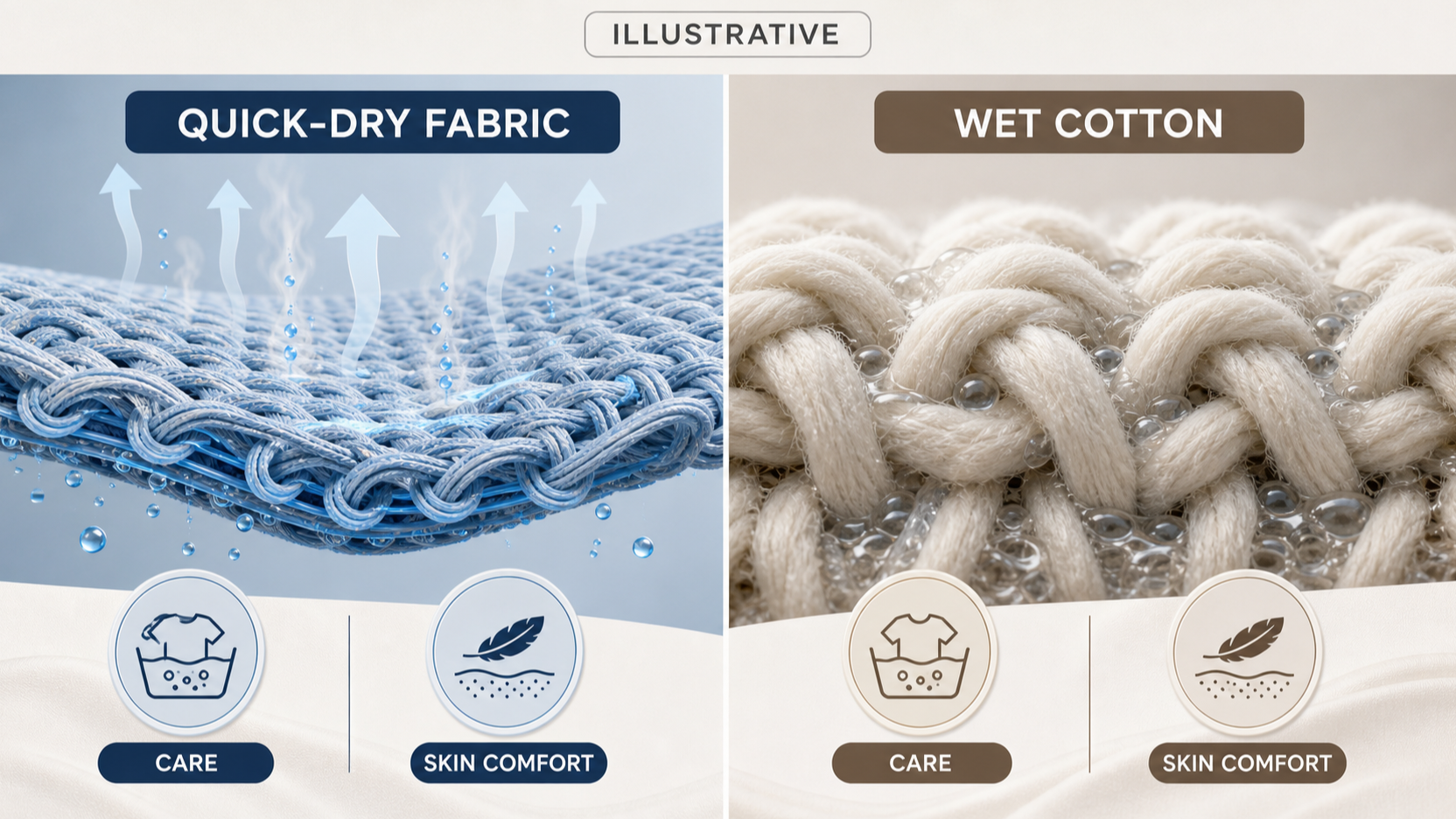
Cotton can feel familiar and comfortable, but it is not usually the strongest choice for a sweat-heavy performance layer. It absorbs sweat and does not dry quickly. Because it can stay wet, MedlinePlus says it may make you cold in cooler weather and is less effective than synthetic fabrics at keeping you cool and dry when you sweat a lot in warm weather. (source)
Synthetic quick-drying fabrics may be a practical alternative when staying dry is important. Wool can also be worth considering for its cool, dry and naturally odour-free qualities. (source) The trade-off is not simply “natural versus synthetic”: garment weight, construction, fit and care all influence how a piece feels in use. Antimicrobial-treated clothing is sold for sweat odour management, but it should be considered a garment feature rather than a reason to ignore washing and post-workout hygiene; MedlinePlus notes that some workout clothing uses special antimicrobial solutions to combat odour from sweat. (source)
Skin comfort deserves the same practical attention. The American Academy of Dermatology notes that sweat can clog pores and contribute to breakouts, chafing and other skin concerns for some people. (source) Damp, rubbing or overly tight clothing can be especially unhelpful if you already notice irritation during exercise. Choose a fit that does not rub or trap you in wet fabric for longer than necessary, and change out of sweaty workout clothes when practical.
This is general comfort guidance, not a diagnosis. If a persistent rash, painful chafing or another skin concern continues, seek personalised advice from a qualified healthcare professional.
Match athleisure to the activity
Use the activity as your first sorting tool.
Running: Favour clothing that stays put and does not get in the way. Form-fitting, stretchy layers can be useful because MedlinePlus lists running among activities where this type of clothing may be preferable. (source) For longer or sweatier runs, prioritise fabrics that pull sweat away from the skin and dry quickly. Adjust layers for temperature: the same damp fabric that feels tolerable on a warm route may feel chilly in cooler weather.
Gym training: Let the session shape the fit. For strength training, loose-fitting clothing can work if it does not catch on equipment or restrict your view of your position. (source) Test deep squats, lunges, presses and pulls before committing. A fitted stretch layer may be more convenient for exercises where loose sleeves, hems or drawstrings would interfere. If you use benches or machines, check that pockets, zips and bulky seams are not uncomfortable against the equipment.
Yoga and Pilates: Gentle yoga can suit loose-fitting clothing, while MedlinePlus identifies form-fitting, stretchy clothing as a potential choice for advanced yoga or Pilates. (source) The distinction is practical: for poses involving inversions, wide ranges of motion or repeated transitions, closer-fitting pieces may provide more predictable coverage and stay in place. Choose a waistband and neckline that remain comfortable when you fold, twist and reach.
Everyday wear: For travel, errands and low-intensity walking, choose the balance you will actually wear. A relaxed layer may be comfortable and versatile, while a moisture-managing base layer can help if you expect a warm commute or a walk between plans. There is no need to select the most technical option when the activity does not demand it.
Climate, intensity and equipment can change each recommendation. In a cool setting, plan around the discomfort of wet fabric; in a high-sweat class, give more weight to quick drying; around machinery or bikes, remove loose details that could catch. A mixed outfit can be sensible when one item needs to be fitted for stability and another needs to be looser for comfort. (source)
Use a practical fit and comfort check
A short movement check can reveal more than a mirror check. Wear or try on the garment, then raise both arms, reach forward, squat, lunge, twist and sit. For the activity you do most, add one realistic motion: jog in place for running, perform an overhead reach for gym work, or fold forward for yoga.
Check four things. First, mobility: can you move without pulling, pinching or holding your breath? Second, coverage: does the garment stay where you expect when you bend and reach? Third, stability: do waistbands, straps, sleeves and hems remain in place? Fourth, interference: could fabric, fastenings or loose details catch on equipment or slow you down? These checks align with MedlinePlus guidance that exercise clothing should allow easy movement and should not get in the way, catch on equipment or slow the wearer down. (source)
Then imagine the same garment when warm and sweaty. Will the fabric still feel acceptable if it becomes damp? Does it dry quickly enough for the likely conditions? If you are prone to chafing or breakouts around workout areas, avoid dismissing rubbing or trapped sweat as a minor issue; the AAD identifies sweat as a factor that can contribute to clogged pores, breakouts and chafing for some people. (source)
No fitting-room check can predict every workout. However, choosing based on movement, sweat management and personal comfort gives you a more useful basis than choosing solely by the label, trend or standing fit.
Frequently Asked Questions
Should running clothes fit tighter than gym clothes?
Not necessarily, but a closer-fitting, stretchy garment can be practical for running because it is less likely to move around or get in the way. MedlinePlus lists running among activities where form-fitting, stretchy clothing may be useful, while it lists strength training among activities where loose-fitting clothing can work. (source) In either case, the garment should allow easy movement and should not catch on equipment or slow you down.
Is cotton suitable for performance athleisure?
Cotton may be comfortable for low-sweat, everyday use, but it is generally less suitable as a performance layer for heavy sweating. It absorbs sweat and does not dry quickly; when it stays wet, it can make you cold in cooler weather and may not keep you as cool and dry as synthetic fabrics in warm, sweaty conditions. (source) Consider the expected intensity, temperature and your tolerance for damp fabric.
What does moisture-wicking fabric mean?
In this context, it describes fabric intended to pull sweat away from the skin. MedlinePlus recommends fabrics that do this and dry quickly to support comfort and dryness during exercise. (source) The label is a useful clue, but compare it with fibre content, fabric weight, garment fit and the activity rather than assuming the term alone proves suitability.
Can workout clothing affect skin comfort?
It can matter for some people. The American Academy of Dermatology says sweat can clog pores and contribute to breakouts, chafing and other skin concerns. (source) Clothing that remains damp or rubs while you move may feel less comfortable, so consider breathable, quick-drying options where sweat is likely and change out of sweaty clothing when practical. Persistent or painful skin problems need personalised medical advice.
Related reading
- Best performance athleisure: evidence-led top choices
- lululemon review: strengths, limits, and alternatives
- How to choose performance athleisure for your needs
- When to buy performance athleisure for better value
Editorial information: About our editorial team · Read our editorial policy · Read our affiliate disclosure.